Wednesday, March 31, 2010

Class Act Books - Excellence in Romance Fiction - Seeks Submissions

CLASS ACT BOOKS

Note the following call for submissions from this relatively new traditional romance publisher of paperback and ebook formats - http://www.classactbooks.com/ :

Romance and Erotica Romance Novels - Looking for those novels in any romance genre and sub-genres that will stir a reader's heart. Write us those sweet to sassy hot romances, we love to hear new author voices that can write characters that come alive off those pages. Send in your best novel from 25k to 75k.

At the present time the books are in six retail stores and also available on the website in both print and ebooks. Through the retailers your book is available for readers on their IPhone and ITouch, and any handheld reader. Of course, having the ISBN puts the print books in BIP (Books in Print) through Bowkers, which makes them all available in any book store in the US and internationally. Class Act Books is growing every day and will continue to expand.


NOTE: If you want to learn about all the different subgenre in romance, spend some time at this site. It's detailed!
 
DOUBLE NOTE: Dang, the weather is gorgeous here. Planted butterbeans, field peas, okra, green beans and squash today when I should have been writing.

Monday, March 29, 2010

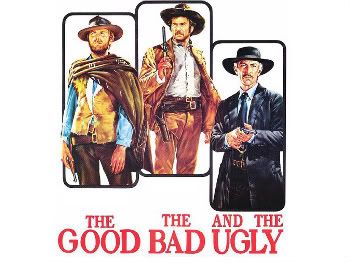
Learning from the Good, the Bad, and the Ugly

THE GOOD
Remember the great teachers in your life? You can put your finger on exactly how they gifted your life. You didn't mind sitting on those hard chairs because the teacher poured ideas in your head that tasted like butterscotch.

THE BAD
Remember the bad teachers? You fabricated ways of getting even, skipping class, maybe envisioning him/her doing crazy things they wouldn't be caught dead doing. You were bored or else they didn't know what they were doing. They sucked away part of your life.

THE UGLY
Oh God, who could forget the "educators" from hell. The ones who failed you on papers because you said the sky was blue and they thought it was green. The ones who told you to study one thing for a test, causing you to flunk a mid-term because none of that was on it. The ones who embarrassed you in class because they could.

It took all three to make you an adult. And it takes all three types of editors, publishers and agents to make you a good writer.

THE GOOD
The good professionals empower you, make you giddy with validation. You never want to come down off thte high. You crave their guidance, and they don't lead you astray. These types usually have flocks of proteges, mentors and fans, so getting close to them might prove a challenge, but once they touch you, you soar.

THE BAD
These guys (or gals) don't reply to your queries and throw your SASE in the trash. They might respond, however, with a form letter, stuffed in an envelope by some editorial assistant on loan from the local community college. They are slow to respond. Some pay late. They are a lesson in frustration, but in many cases you are forced to deal with them to earn a living. Most of the time you try not to. They occasionally pop up on forums as ones to avoid.

THE UGLY
They ask for a revision (or two) and kill the piece anyway. They steal your idea. They still don't pay you after five certified demand letters. They sit on your manuscript for a year then say they aren't taking new clients. They seem to practice at being nasty, curt and pompous, infusing poison in your writing eden, where you escape to be safe. They make you not want to write anymore for fear of being scammed . . . again.

Believe it or not, each one of these personalities molds your career. Without experiencing the flavor of each, you don't appreciate what normal, good or professional is. You don't learn what works, what doesn't and who to trust. What failed you and busted your chops in one arena, saves your butt in another.

Yeah, it's the pits to endure the idiots, but those idiots make you stronger. You become educated, adept, even savvy at manuvering the obstacle course. You pass up the bad markets and irreputable publishing people you might have fallen for before.

You've heard the old sayings about climbing back on the horse, getting up after falling on your knees. Those tumbles scar you, but those scars make you tough. So you shed a few tears. Everyone cries. But not everyone stands back up and continues on.

There isn't a writer alive who doesn't have scars. Look at it this way . . . if you aren't collecting yours, you aren't trying hard enough to make yourself a writer. Just keep your head about you and don't fall off a cliff.
Saturday, March 27, 2010

The Future of Publishing - My Spin

THE FUTURE OF PUBLISHING


In case you've not surfed the publishing news lately, this YouTube video came out entitled The Future of Publishing. It's amazing people from newbies to seasoned agents and publishers. Make sure you watch it all the way through in order to glean the effect.

http://www.youtube.com/watch?v=Weq_sHxghcg

Bottom line is that reading material is here to stay. Unless you live under a rock, you've heard all the controversy and hoopla about electronic reading devices, ebook contract squabbles between publishing houses and Amazon, ebook pricing and ebook release strategies.

Yes, it's time you understood about ebooks. No, you don't have to go crazy, but just like you must digest the differences between self-publishing and traditional publishing, you need to realize the nature of ebooks. They are a separate negotiable item these days - another rights issue. Don't care to study the details? Land an agent. Don't care to use a literary agent? Then bone-up on ebooks, because you'll have to decide how you want your book presented to the world.

People on list groups, blogs and chats get a little flustered about ebooks, as if publishing is on the brink of destruction. It's not. It's modernizing. Do you realize that the evolution of the paperback book consumed the entire decade of the 1930's?

Albatross Books originated the concept but failed. Penguin picked up the baton and ran with it four years later, and a few years after that Pocket Books sprouted through Simon & Schuster. In the late 30's they were faddish, and accepted.
Point is that publishing methods will change over our lifetimes.

Why get hung up on whether you'll publish hardback, paperback or electronically? Consider them all. Welcome them all. Offer to be open to any and all methods.

Same goes for selling. You can't sell online without understanding how Amazon works, how electronic books work, how platforms work. You can't sell via bookstores without understanding returns, distribution, retail and wholesale values. Part of the fear and uncertainty comes from lack of understanding. Educate yourself
and remove the doubt.

Embrace all manner of the written word. Be willing to sell your words via all channels. The point is to write and spread your stories across the masses. Who cares how they buy it?

No, publishing isn't dead, as so many cynics have expressed of late. Publishing is growing. Some of us are just enduring growing pains.

Friday, March 26, 2010

Write a Commercial


Create a Go Daddy commercial that’s between 15 - 30 seconds long. You must own the rights to all materials (including music) included in your video. Go online download official Go Daddy logos and theme song for use in your commercial. Upload your video to YouTube. All videos must conform to YouTube's terms of service as well as to Go Daddy's official contest rules. Come back online, click the "Submit Your Own" button above the video player and fill out the form to enter your video. Two sets of judges. Two groups of winners! Enter by April 23, 2010. Voting/judging ends May 17, 2010.

1. Impress the judges and win up to $100,000!
Grand Prize: $100,000
2nd Prize: $50,000
3rd Prize: $25,000

Your video and marketing skills could pay off BIG with the panel of judges. Videos will be judged in the following categories: Overall Concept (30%), Brand Fit (30%), Script (20%), Production (20%). For more details, view Official Rules

2. Impress the community and win computers, camcorders and more from the sponsor DELL.
NOTE: I receive requests for this type of "publishing" or "production" opportunity, but I don't usually travel in those circles. I use GoDaddy, so this caught my eye. You know the commerials. They border risque and definitely have a trait all their own. They make me chuckle, I know that. Go to the GoDaddy site to see the commericals that didn't make the Super Bowl or are only available online, and you'll get a better idea.
DOUBLE NOTE: I knew a road trip would joggle my chapters. Nothing spurs my creative mind better than flying or riding long distance. My recent trip to Mobile, AL gave me great ideas.

Wednesday, March 24, 2010

Is the Public Expecting Ebook Versions Now?

Uh oh. Someone published a book, posted it on Amazon, and it wasn't available for the Kindle. Author Michael Lewis wrote a bestseller entitled The Big Short. Reviews glowed. However, regular readers now want a quick fix. If they read a review and get hungry for the book, those enabled with electronic readers now want instant gratification - a 30-second download - so they can jump into the first chapter.

But what happens when the book isn't available in ebook format? Apparently people get angry. And they vow not to read the author again, or never buy the book, or worse, find another book like it and read it instead.


I sort of understand. I own a Kindle DX. During a recent trip, I found myself always grabbing it to read a page or two between other obligations. Y'all . . . it's addictive. And the ability to receive your book in seconds also spoils you. I'm reading books now I would have waited a few months to read, all because I reacted on impulse to download it. So far I haven't regretted it, but I have made a conscious effort to control my urges. My son has a friend who bought an iPod and went nuts with iTunes because Apple had the credit card on file, making it easy to just pick and click. Same deal with Amazon. Funny how I can make myself wait until a movie is on cable, but I want to read a book now.


But if this teaches us anything, it's this: if you publish, include ebook availability. Advertise the fact. Embrace electronic reading. I published ebooks ten years ago when they were laughed at. I've seen the ebb and flow of the concept. Believe me . . . this time they are here to stay.

Monday, March 22, 2010

Borders Stores Want You and Your Book Club


Borders' Michigan headquarters sent out official notices, posters and signs to all 507 stores to embrace the book club in hopes they'd be more inclined to buy more books.

Why do you think B&N and Book a Million have coffee, pastries and other light fare? Why do they have music? Business 101 states that the more someone hangs around your product, whether online or in a bricks and mortar store, the more likely they make a purchase.

It's a shame that Borders' had to figure this out after closing 200 Waldenbooks stores. I loved that store, and often boycotted the huge B&N across the highway because I liked the homey feel of Waldenbooks. From the time my sons were 7 and 9, they visited the store as a treat for good grades or a team sport win. Books were their candy. Now 25 and 27, they were disappointed when the local store shut down late last year.

Just goes to show you that even the big dogs don't always think with common sense. In their effort to be different from the other guys, they lost a lot of ground.

Regardless, they want book clubs now. I think it's a grand adjustment. As a writer, you might consider approaching Borders, asking if you can speak to those book clubs . . . and if they could carry your book. While they're on a roll with new changes, try to incorporate your book in the new order.

Friday, March 19, 2010

SMORIES - Get your children's story online and vie for $1,500


Smories.com is an exciting, independent and free website for kids to watch great new stories being read by other kids. Click here to start watching. It is also a place for children's story writers (published and unpublished, professionals & amateurs) to get their work published online, whilst retaining all rights.We are offering a £1,000 (US$1,500) prize for the best story submitted each month. Entries accepted from anywhere in the world. Submission is free.The current competition closes 31 March 2010. Click here for details and to submit your story. Limit 1,000 words. Text only, in English.Must be fiction for children from 3 to 8 years old. Poetry & rhyming stories may also be submitted. You must be the writer or owner of the copyright. A maximum of two stories per writer per month can be submitted.

05 Apr 2010: We will announce a list of the 50 stories we like best. These 50 stories will then be filmed being read aloud by children.

01 May 2010: The completed films will be posted online simultaneously.

31 May 2010: The story receiving the highest number of views over the preceding 30 days will win the prize.

Stories will be published online on youtube.com and on smories.com. Full credit and copyright will be attributed to the writer.

NOTE: A rather cool idea for children's writers. This entity is located in the UK, so you're likely to hear your story read back to you with quite a charming accent. Did not see an entry fee, which is quite nice.

DOUBLE NOTE: Hustling like crazy. Whenever I go out of town, I get behind and it takes a week to catch up. Don't tell me someone can't make a living online. While people think it's cool to meet face to face, I make more advances, more progress, when I'm online. This Smories site makes online exposure work for children's books, while at the same time opens doors to more international stories for kids, parents and teachers.

Thursday, March 18, 2010

The Writing & Critique Group Survival Guide - by Becky Levine


The Writing & Critique Group Survival Guide-
How to Give and Receive Feedback, Self Edit, and Make Revisions

by Becky Levine

Writer's Digest Books announces the publication of The Writing & Critique Group Survival Guide, the best way to create a respectful, productive writing or critique group, discussing all the important details of finding a group, running a critique meeting, and building a group that will evolve with its members.

Each chapter, whether discussing plot or character or voice, teaches the writer how to read for a critique, learn from criticism, organize and prioritize feedback, revise based on the specific feedback they receive, and more.

Perfect for writers and creative-writing students, this book offers tangible instruction on how to spot legitimate problems in any genre and how to give and apply feedback in a helpful and meaningful way.

Becky Levine is a writer, freelance editor, and speaker. Becky is a book reviewer for The Horn Book Guide, speaks regularly at writing clubs and conferences, and is a member of the Society of Children’s Book Writers & Illustrators (SCBWI), Sisters in Crime (SINC), and the California Writers Club (CWC). She lives in South Bay, CA. Her website and blog are http://www.beckylevine.com/ and beckylevine.livejournal.com.

Available at Amazon.com and bookstores everywhere!

$19.99, ISBN-13: 978-1-58297-606-8
WRITING REFERENCE
Writer’s Digest Books

NOTE FROM HOPE: You either love or hate critique groups, but find one that clicks, and you'll sing it's praises from the rafters. Some of the best critique groups are originated by writers who could not find one that works. Having a guidebook to get you started makes for a successful group that could stand the passage of time, opinions and colorful personalities.


DOUBLE NOTE: The first three people who leave a comment on this blog will receive a free copy. Send hope@fundsforwriters.com your name and postal address when you do.

Wednesday, March 17, 2010

How to Write Your Memoir and Still Go Home for the Holidays


Yesterday, I gave you a book review of a wonderful new release entitled The Power of Memoir, by Linda Joy Myers. The author Linda Joy offered to me our guest blogger today. If you've ever been excited about writing a memoir, this book is a must read. Linda Joy is president of the National Association of Memoir Writers and a practicing psychotherapist. She makes writing memoirs feel safe. ~HOPE

How to Write Your Memoir and Still Go Home for the Holidays

Linda Joy Myers
Author of The Power of Memoir

In every memoir workshop I’ve presented, I encounter questions about family, friends and loved ones who are “characters” in the memoir. Of course, since a memoir is about the inner circle of our lives, we are going to be writing about people who might be “reluctant characters”—in that they wish you were not writing a memoir at all.


It’s understandable for people to feel exposed through writing our personal stories. It’s important for memoirists to take into account the fact that we are offering up other people’s lives in our work. Some writers, even in fiction where the characters can easily be identified by those who know the author, feel that whatever has happened is fair game, and that no one should silence or stop them from writing whatever they feel like expressing.


Others feel an obligation to take into account the people who are in a memoir, even those whom they feel have created pain or trouble in their lives. But where do we draw these lines? If we worry about all this too much and listen to the voices of family in our heads all the time, we won’t write anything. We can get tripped up on what “truth” is, asking, “Do I have to include the family’s truth or can I just write my own?”

The challenging thing is that the inner critic can take on these opposing voices. We can become stuck and unable to write with a confusing chorus chattering in our head.

I have some suggestions:

1. write the first draft of your memoir without thinking of anyone but yourself and your memories. Don’t tell the family you are writing. If you’ve already confessed, now tell them that you’re taking a break, that you’re writing fiction or whatever it takes to stop the questions. Some families are more intrusive and nosy than others.


2. when the inner critic voices arise, write down what they’re saying and get them out of your head for a while. Then go back to your writing.


3. Keep your work private from friends or those who might share your work with others. If you are in a writing group, ask for confidentiality in your group. If you live in a small town, enroll in an online class.


4. Focus on your own truths. Think about the freedom and the healing that arises from writing without censoring, from putting everything on the page that you have to say. Research shows that writing the true stories of our lives changes our brain and frees us from our old perspectives. You can experience a new present and future by writing!

It takes courage to write a memoir, and perseverance. Begin today! Write for ten minutes per day about the most meaningful moments of your life. Soon you will have many stories and a whole new view of your life and yourself.

Tuesday, March 16, 2010

The Power of Memoir


The Power of Memoir - A Book Review
By C. Hope Clark

I never wanted to write a memoir. After all, why would people want to know about my family, education, teenage angst, broken marriage, roller coaster kids or love of all things nature? I wouldn't want to read it, much less push it on total strangers. So many writers email me about writing memoirs, and many times I pause, wondering how to advise folks about the topic when I don't see the point in publishing personal history.

Then I was asked to review this book. Honestly, I hesitated. But I believe in giving any writing book a chance and agreed to give it a look-see.

By the end of Chapter One, I had visions of my memoir. I caught myself answering questions, performing exercises, wondering how I could find more hours in my day to give this new writing opportunity a chance.

I can't decide if the author Linda Joy Myers is that good an author or that good a psychotherapist. Whichever the label, she pulls off nicely the lesson on how to write a memoir.

Memoirs can be a can of worms. I once purchased a notebook and labeled each page with a year, beginning with my birth. My goal was to write the things I remembered from each year, in an attempt to see if I could find a reason to write my story. I quit at year 5. Too much stuff . . . and I wasn't even up to elementary school. The task overwhelmed me, and the journal sits in a desk drawer, too pretty to toss. Besides, I envisioned memoirs as stories belonging to celebrities, victims and heroes.

Then Linda Joy spoke of turning points in Chapter Three. "Choosing the major events - events that changed you profoundly - points to possible themes and stories to include." I didn't need pen and paper to define my turning point. Suddenly, the theme took form as to what my memoir would contain if written. Step by step, she took my hand, making a memoir seem so noble, so healing, almost a clear path toward a brighter future.

The Power of Memoir is not just about writing a memoir. It's about finding yourself through writing. Whether you want to publish your life or not, this book helps you sort through the moments, define the ones that matter most, and assist you in feeling better about putting your stories on paper. And you will enjoy the guidance.

Bravo, Ms. Myers. Two thumbs up.
Available at Amazon.

Tuesday, March 09, 2010

CREATIVE NONFICTION CONTEST - ANIMALS


$20 ENTRY FEE
Theme Animals. Deadline April 2, 2010. For an upcoming issue, we're seeking new essays about the bonds--emotional, ethical, biological, physical, or otherwise--between humans and animals. We're looking for stories that illustrate ways animals (wild and/or domestic) affect, enrich, or otherwise have an impact on our daily lives. $1,000 award for the best essay about animals (The Robert Fragasso Animal Advocate Award). $500 for Creative Nonfiction Editor's Award. 5,000 words or less.

NOTE: Everyone loves to write about animals. But this has to be deeper than your dog's trip to the vet or the cat saving you from a fire. This isn't journalism or a magazine feature. This is emotional connection. Challenge, huh?

DOUBLE NOTE: I feel like I'm in a maze with this third book. The writing is phenomenally better, but the plotting keeps bumping into deadend walls.

Saturday, March 06, 2010

Fast, Fun, Financially Filling Fillers


I was reading my latest issue of Sunset Magazine and noticed two very nice filler calls for submissions.

SHARE YOUR IDEAS AND WIN $100

Create a recipe that uses fresh ingredients and can be made in 30 minutes or less. Receive $100 for each recipe published. Send original recipes to www.sunset.com/submitrecipe Include recipe title, its origin, ingredients and directions, plus your name, email, address and phone.

TAKE THE READER WEEKEND CHALLENGE

They seek an original recipe for an inventive weeknight dish that includes these three basic ingredients: chicken (any cut), tomatoes (fresh or canned), and feta cheese. From start to finish, including prep and cooking time, the dish must be ready in 45 minutes or less. You may add additional ingredients. Deadline March 15, 2010. The winning recipe will be awarded $500 and published in Sunset Magazine. www.sunset.com/submitrecipe

What? You didn' t know that recipes could be fillers? Read the fine print in little sidebar blocks in magazines. You'd be amazed at how many request jokes, anecdotes, tips, hints or news, usually paying anywhere from 50 cents to $1/word. Woman's World, Family Circle, Southern Living - lots of magazines.

Not sure how to write a recipe? Yes, there is an art to it. FundsforWriters just happens to have an ebook entitled Cooking Up Recipes in case you're interested.

Have fun!

Wednesday, March 03, 2010

DON'T HUNT FOR IT . . . CREATE YOUR MARKET


Received this announcement for a book writer today:

The Tyneside Cinema is a Newcastle institution and one of the city’s favourite buildings. As the Tyneside comes to the end of a successful heritage regeneration project that sees new screens and new resources in place, it would like to celebrate its rich and diverse history by producing a book. The book will not be a straightforward, historical telling of the story of the Tyneside, but a creative undertaking that will tell the story of the cinema through the examination of the characters that have shaped the history of the building and of the company. We are looking for a writer who can produce a quirky, fun book.

The starting point will be a series of short essays that focus on interesting people and moments from the cinema’s history. For example, the writer might use the perspective of some of the cinema’s usherettes to tell the story of the Tyneside from their perspective – bringing to life the working conditions and lives of these remarkable women. The cinema has lots of information to get the commissioned writer started on the project, so finding the material won’t be a problem: shaping the book and knowing where to draw the boundaries might be. The writer undertaking the job will most likely have a basic grasp of Newcastle’s cultural history which they can bring to the project. They also need to be able to demonstrate their writing ability by providing supporting material that shows their creative writing style and which demonstrates their talent.

In essence, we are looking for a writer who can write creative non-fiction that will appeal to a wide and varied audience and who can pinpoint and bring to life some great stories.The commissioning fee for the project is £2,250. The book will be produced as an e-book and a print on demand book, sold via the Tyneside’s website. The work will need to be undertaken between March and the end of May. Submit a cover letter which explains your interest in the project and outlines your writing track-record and published work; an example of your writing that you think suitably supports your application (no more than 2,500 words). Send this information by Wednesday 17 March 2010 to claire@newwritingnorth.com

====

Okay, so you might not know where Newcastle is, but doesn't this give you ideas? This theatre needs a writer to pen its history, to create a commodity to be sold in the giftshop. How many places have giftshops or bookstores?

Bigger yet, how many landmarks, businesses, nature sites, cities, towns, counties, councils, charities, clubs, geneology groups, family reunions, churches, schools, theaters, restaurants, banks, etc. have a history? How many of those entities could use a book to sell to its members, fans, visitors and clients?

My mother just read a book penned by her high school buddy, who helped found a bank many years ago in a small rural town. The book not only told the history of the bank, but of the town as well. Mom devoured it, recognizing all the people and places of reference. The banker wrote the book himself, but how many businesses have a person able to write such a product? How many have the time?

If you can research, if you can write history, this is an untapped market. Write for a flat fee (work-for-hire) or negotiate royalties. These are self-pubbed products, with the entity you're writing for in charge of sales and production since most of them already have gift shops, mailing lists, regular customers and advertising in place.

For the person who loves research, this is ready-made goldmine. Once you produce one, word-of-mouth does a glorious job, and you probably won't have to leave a hundred-mile radius of your computer keyboard.

Just a thought.

Tuesday, March 02, 2010

SMARTHINKING HIRING ONLINE TUTORS


SMARTHINKING, Inc. is now hiring motivated individuals to serve as part-time online writing tutors starting in August/September 2010. A Washington, D.C.-based education organization, SMARTHINKING, Inc. provides real-time, online tutoring and learning support to colleges, universities, high schools, and textbook publishers. Candidates can work from any location with computer and Internet access. Tutors typically work anywhere from 8 to 29 hours a week. To qualify, individuals must have substantial teaching/tutoring experience in composition and an enthusiasm for online education. The ideal candidate will have training and/or experience in one or more of the following areas: MA or Ph.D. coursework or degree in rhetoric, composition, literature, and/or English education; specialty coursework, degree, or teaching/tutoring experience in English as a Second Language (ESL); and/or teaching experience in developmental and first-year English composition courses.

NOTE: Wow, working at home tutoring writers. Is this a great job opp or what?

DOUBLE NOTE: I've fallen behind and I can't catch up!